
July 3 - August 1, 2026
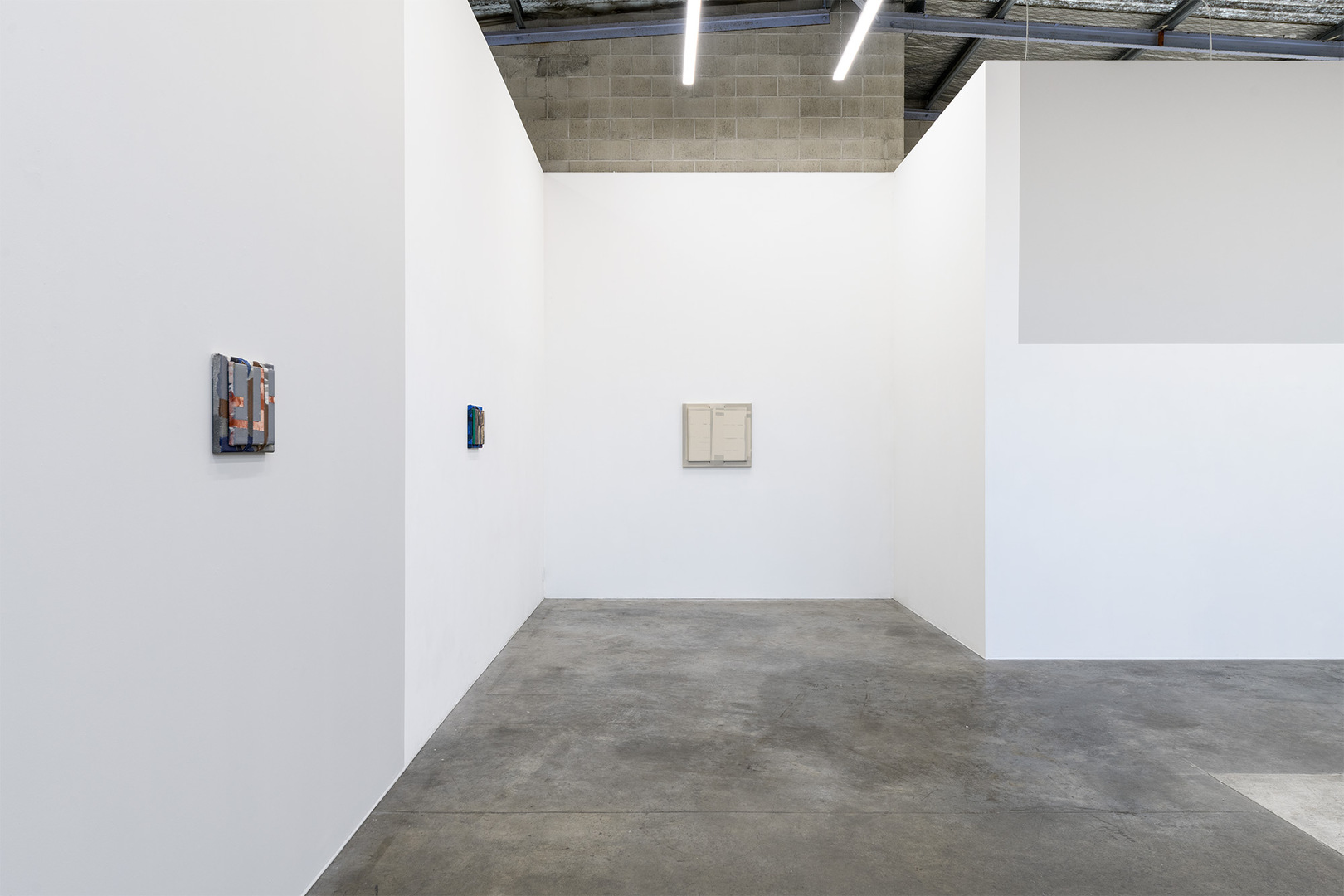
Installation view - front gallery
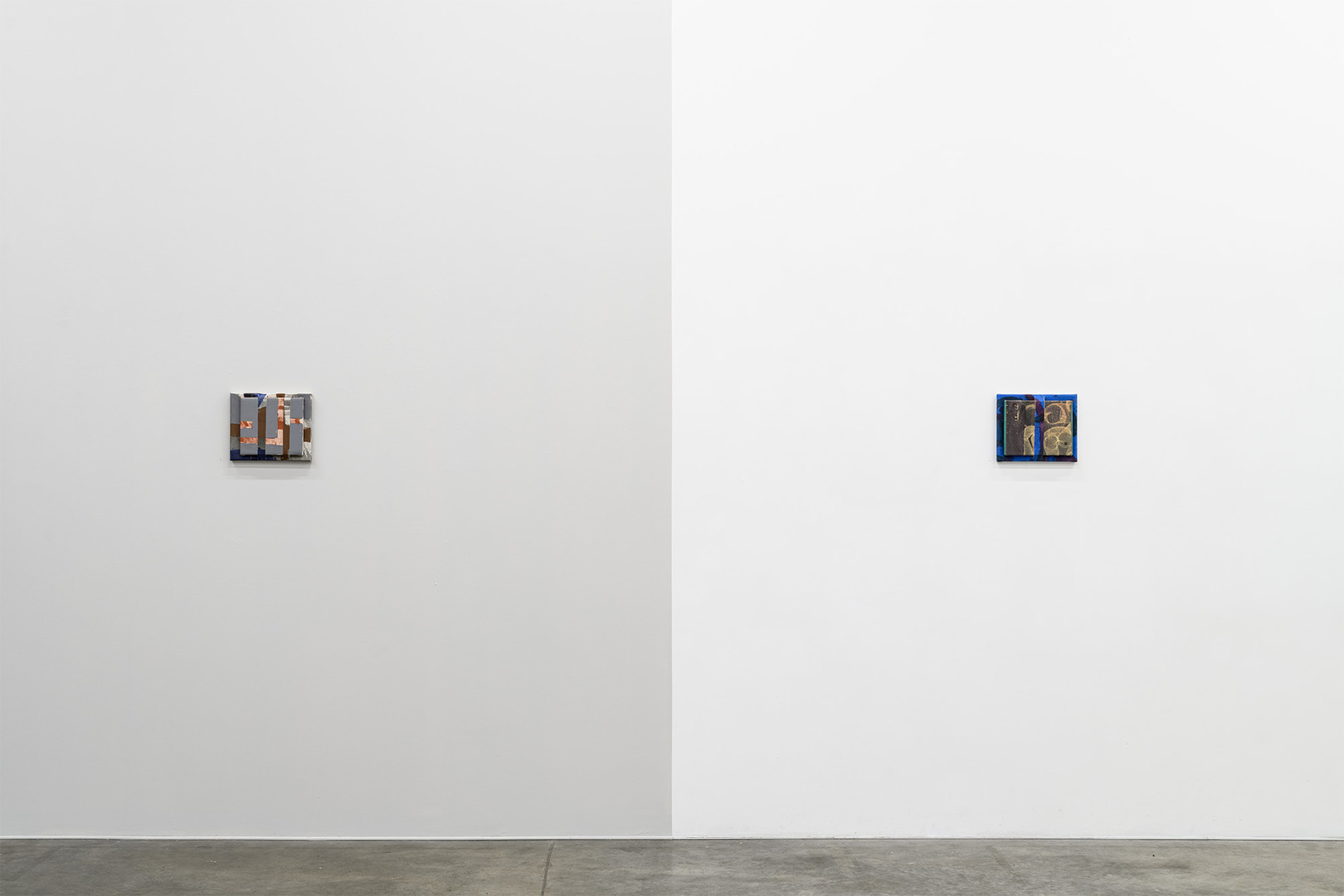
Installation view - Burrow & Fig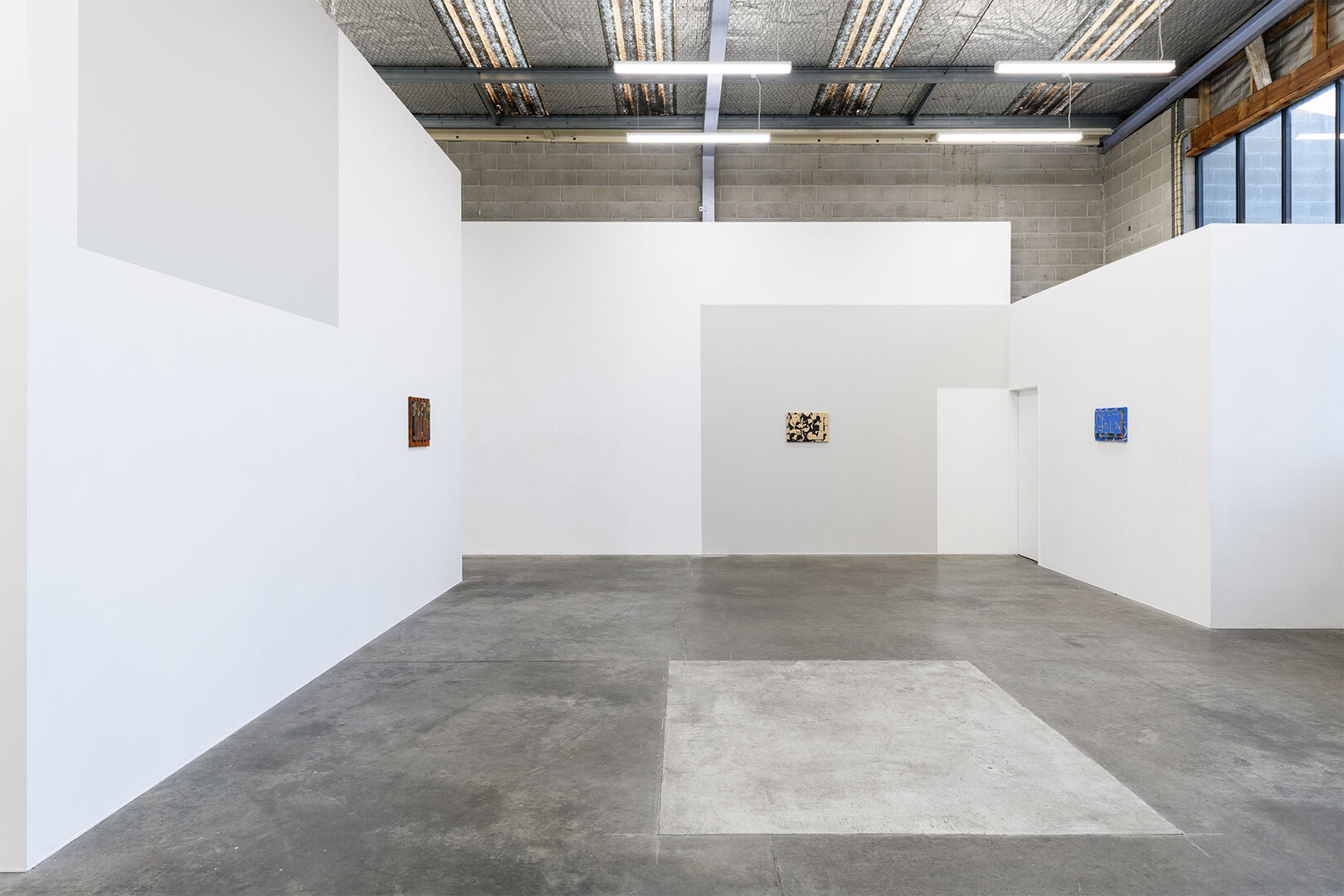 Installation view - front gallery
Excerpt from printed text provided by Oliver Perkins & Hamish Win
Problems / Sombra
Paintings' autonomy is a structural articulation. It doesn't come out of nowhere. It doesn't efface the maker. The American expatriate James Bishop, whose poured monochromes favoured a restricted pallet and a compositional strategy of idiosyncratic lineal portioning, provides a great example of this. Like his contemporary Simon HantaÏ, Bishop preferred procedures over techniques. Technique was viewed as too authorial, something to exert control with. Technique in this terminology is utilitarian and impositional. It is not investigative, not open to discovery. Here's Bishop himself, evaluating the pouring procedure:
I never knew exactly how a painting would look finished...
Sometimes what happened was more interesting than what I thought I was trying to do.
I liked the combination of my doing it and it doing itself
This valence, this ambivalence to authorship allows Bishop's work to provide a counter-model to the heroic subjectivity that we commonly associate with modernist abstract painting. For instance, Bishop's paintings often include all the structural components familiar to Clement Greenberg's veneration of the monochrome: internal frames, modular forms, a flattened surface, the erasure of any representational proxy. However, as Molly Warnock points out, in Bishop's practice these features are not only keyed to actual human-form but they also erode "strict bilateral symmetry". In other words, they're not heroic but quotidian. They insist equally on the "agency and the frame of an embodied maker".
In Bishop's paintings, "forms almost always redouble across a central, horizontal, or vertical axis". This repetition introduces doubt, uncertainty, something reinforced by the fact that the axis itself is also slightly displaced, even imperceptibly so. It shifts about, left, right, up, down, constantly furtive. According to Warnock this creates Bishop's "distinctive expressiveness", something she calls the "just-off-deductive" which allows subjectivity to be reintroduced. The painting is no longer purely opaque, flat, non-representational. But it doesn't fall into a model of lyrical abstraction either. It remains aloof, reserved, mutable...
- Hamish Win
There is a book on Oliver Perkins' pending, featuring his insert paintings and a full length essay by Hamish Win.
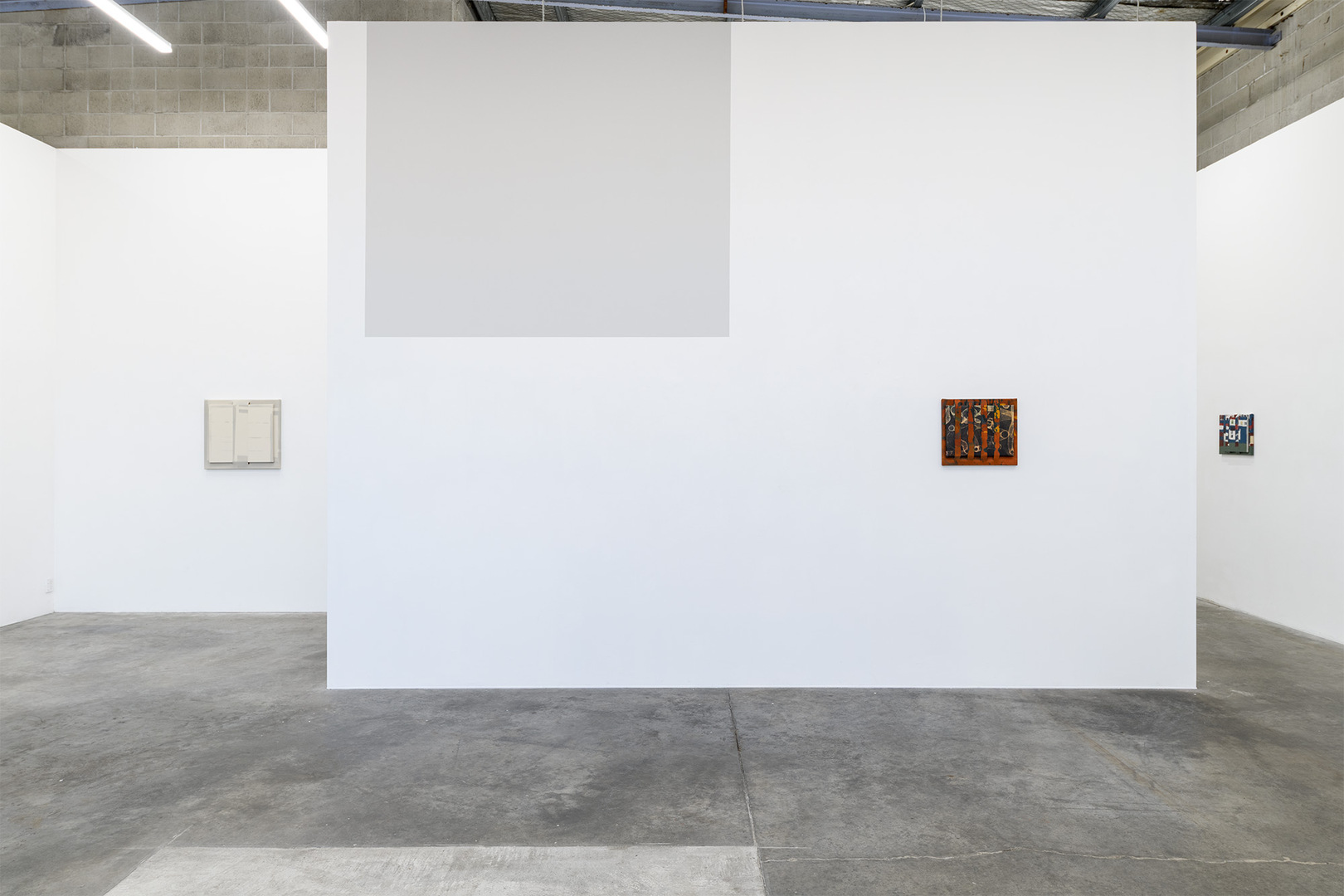
Installation view - front gallery
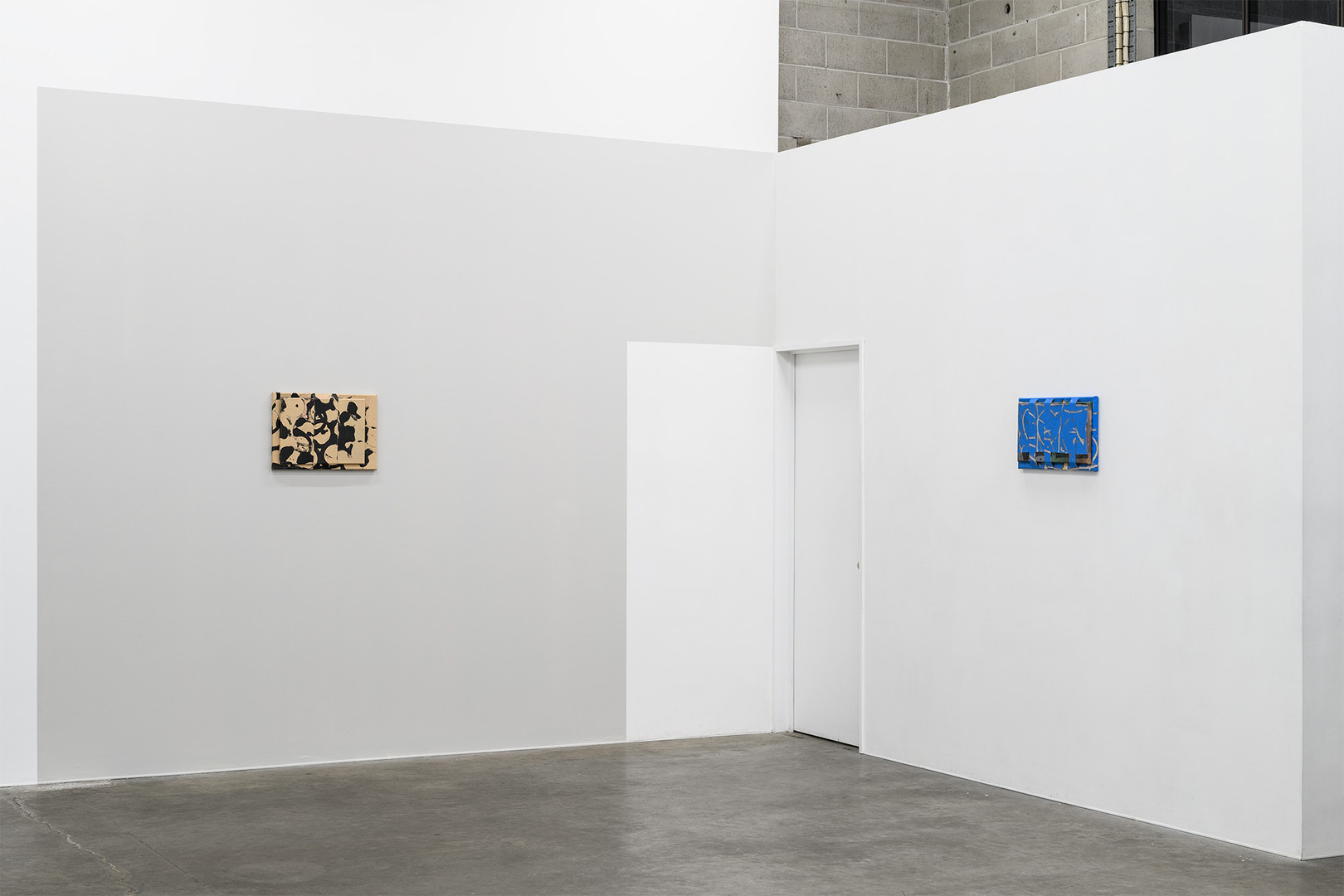
Installation view - Poodle & Blue Scale
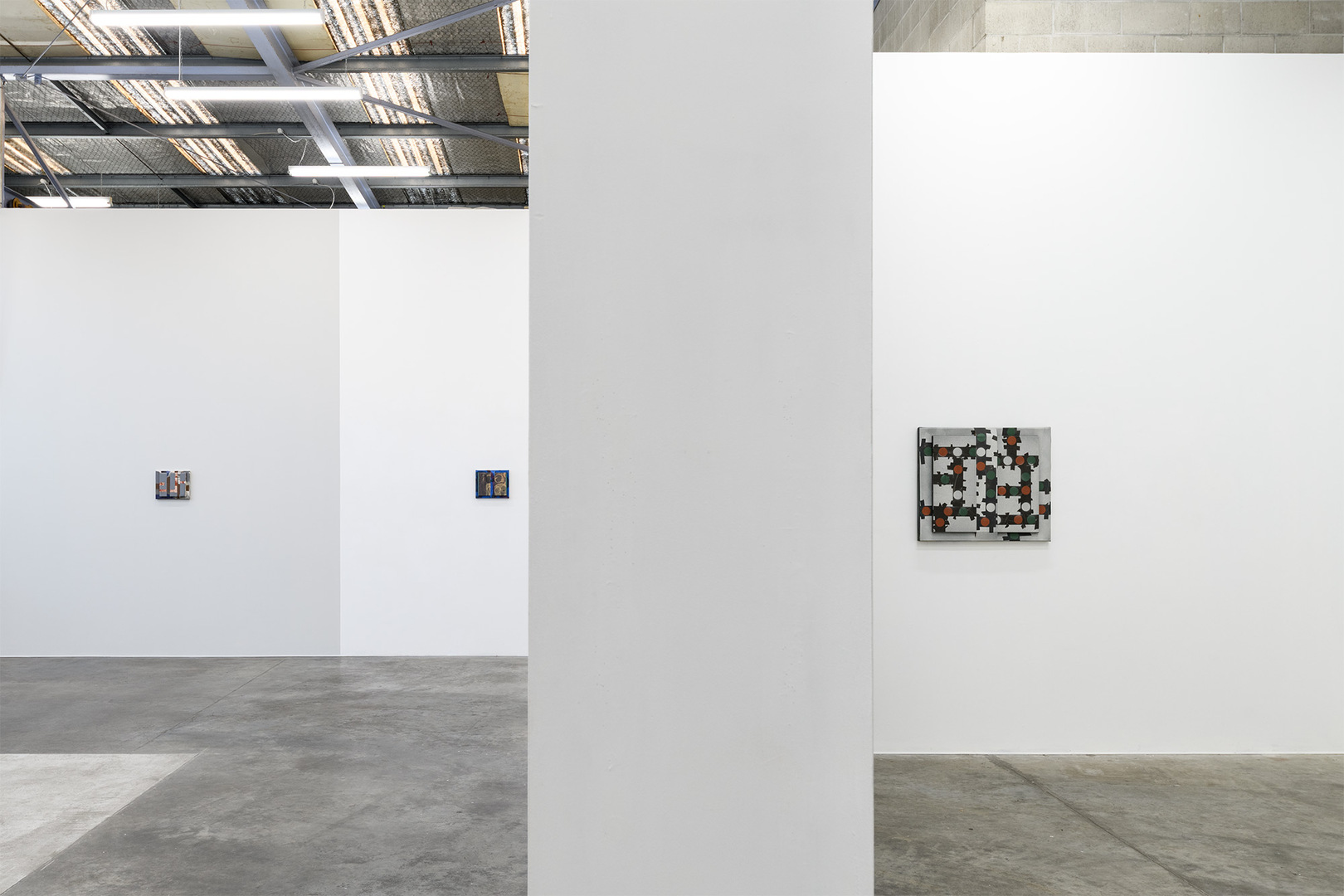
Installation view - front / back gallery
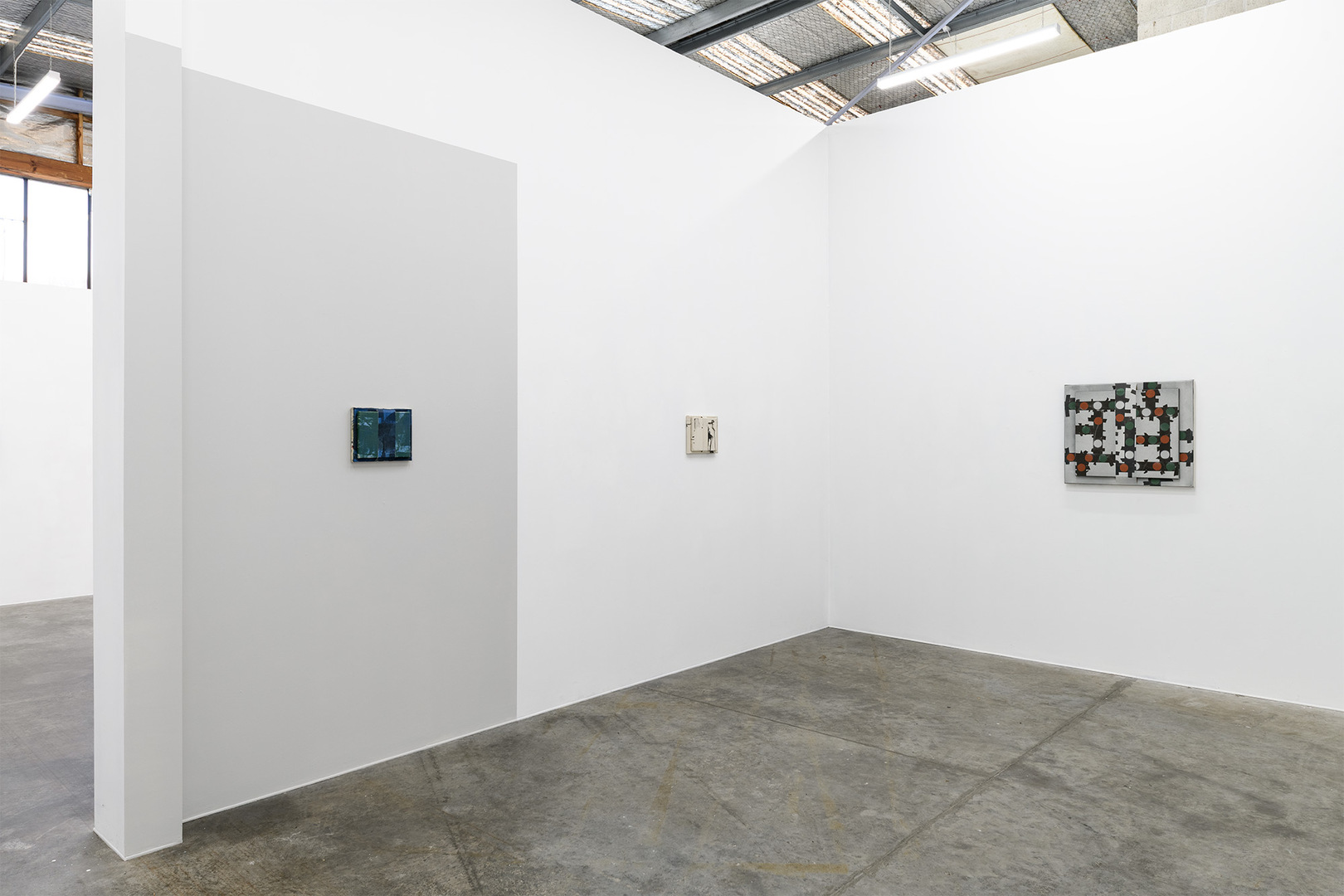
Installation view - rear gallery
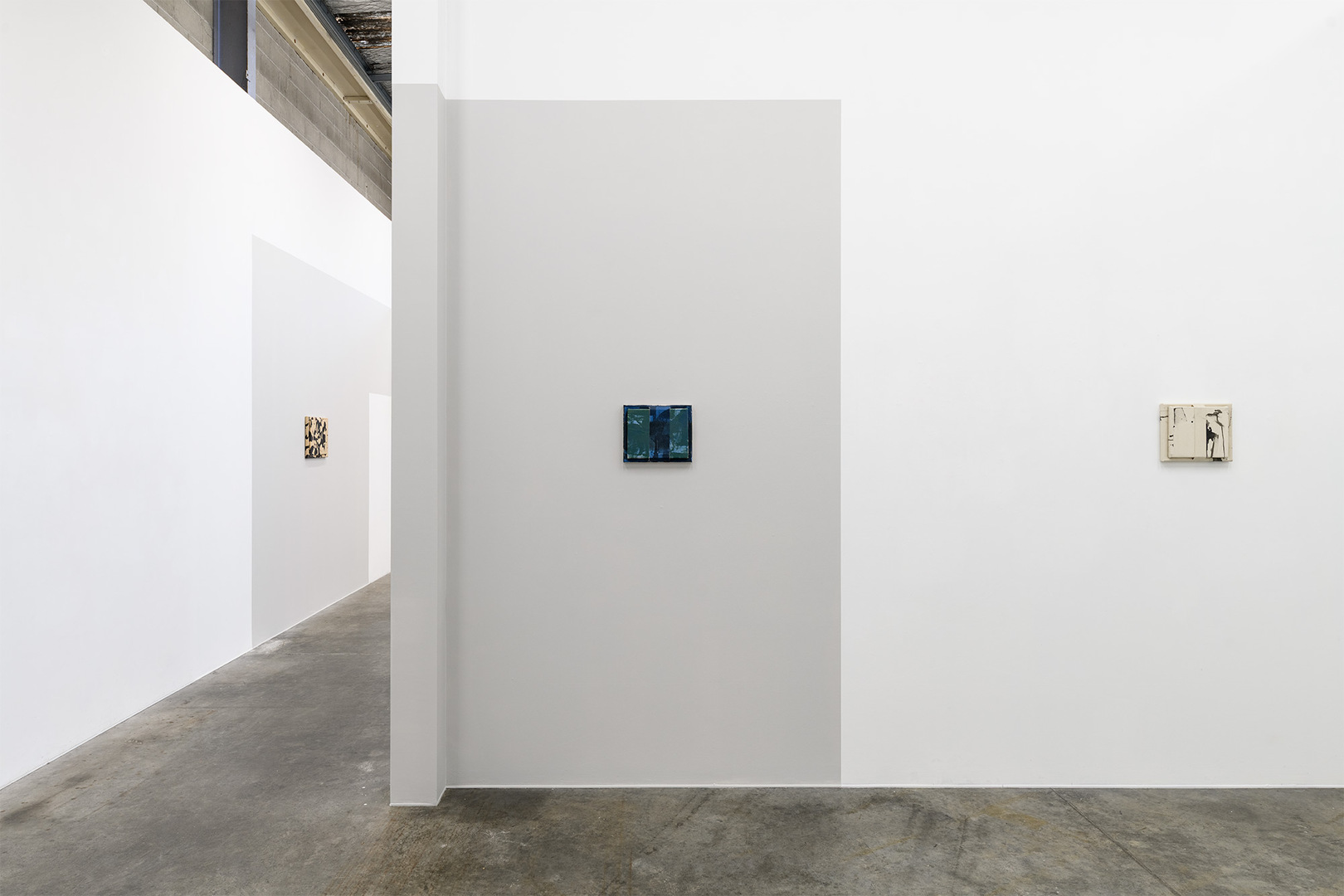
Installation view - Fantasmas & Author
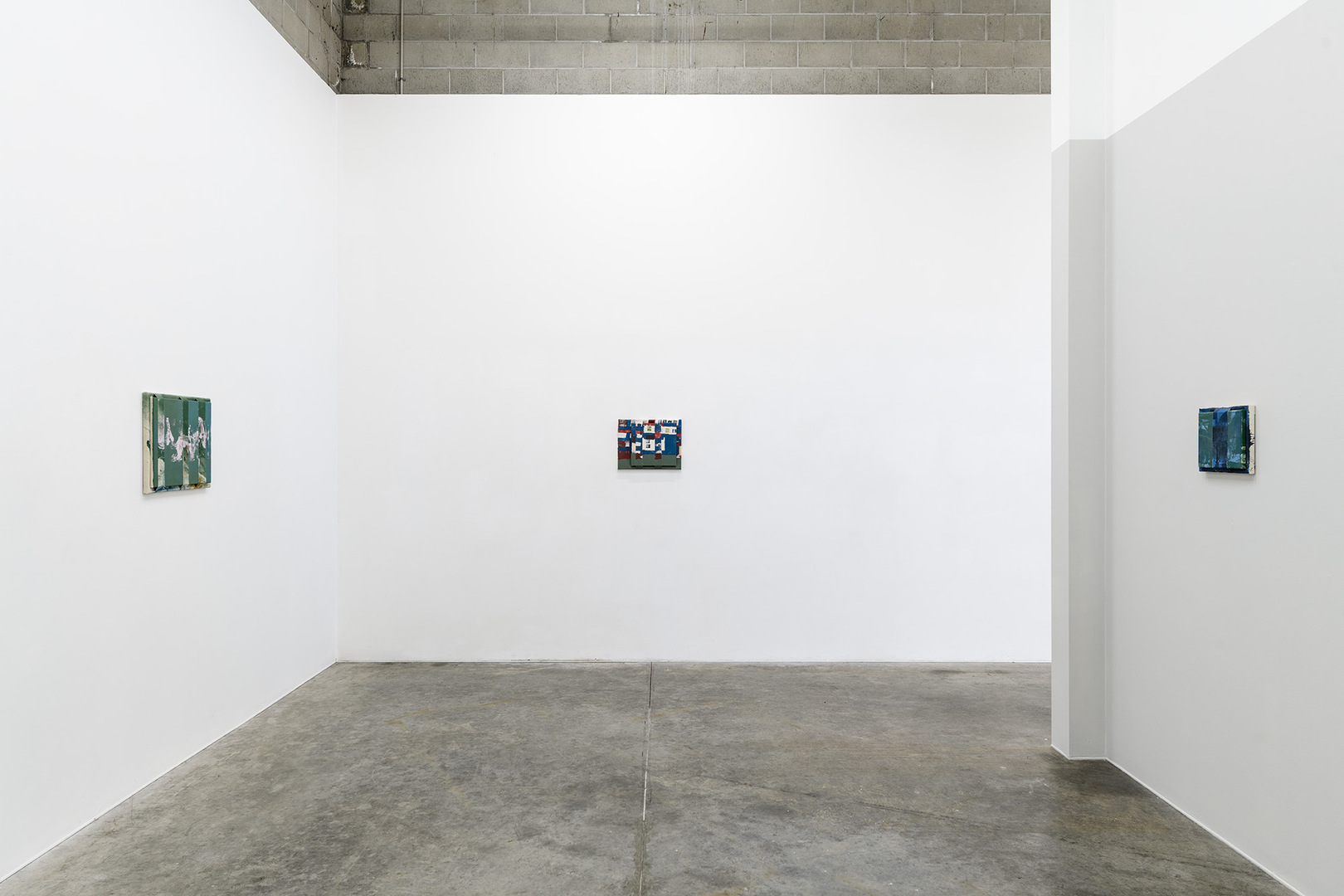
Installation view - rear gallery
Images of all exhibited works are to be found in the 'Details of works' section at the bottom of the page.
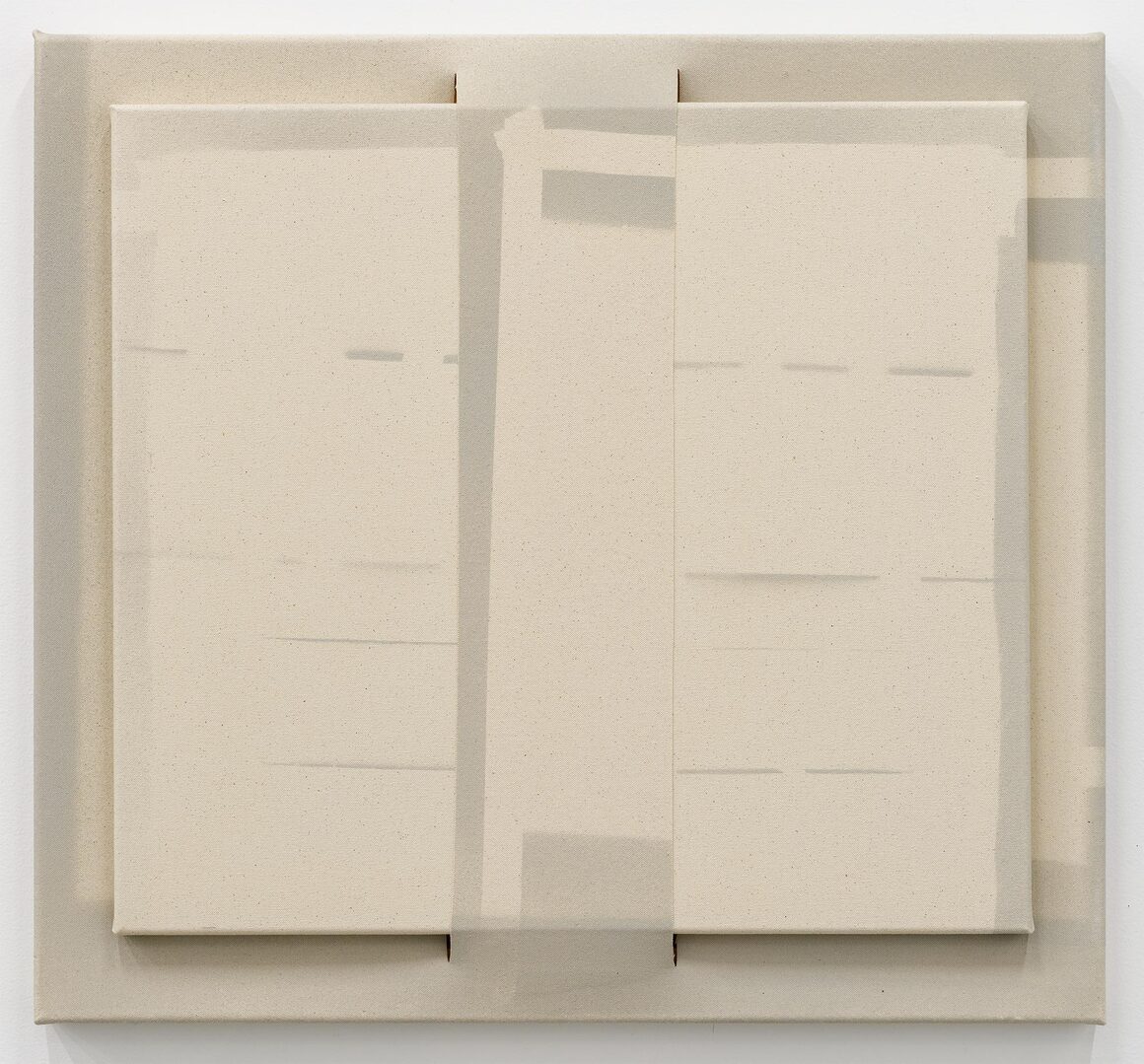
Code, 2026, 600 x 650mm
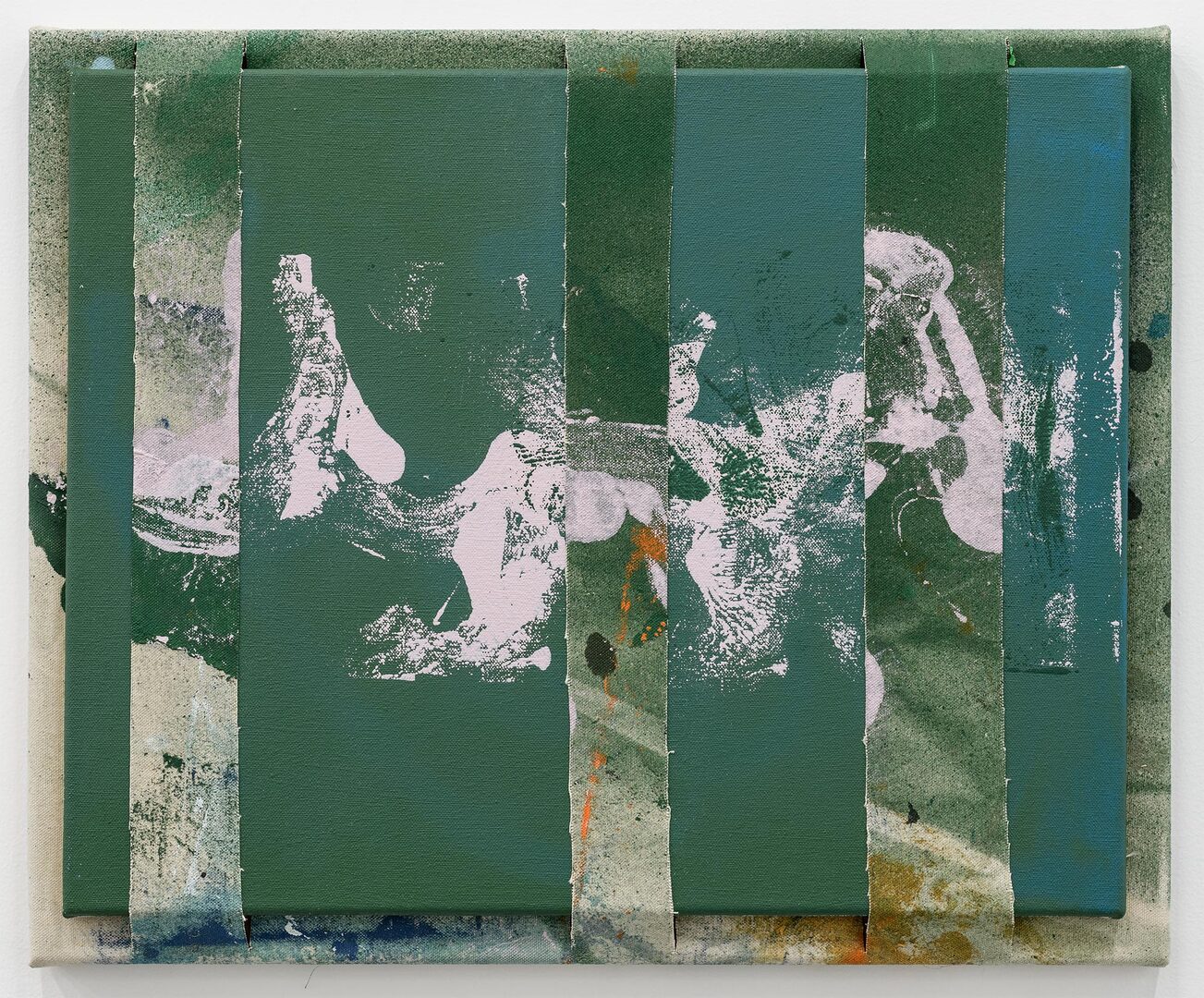
Valence, 2026, 450 x 500mm
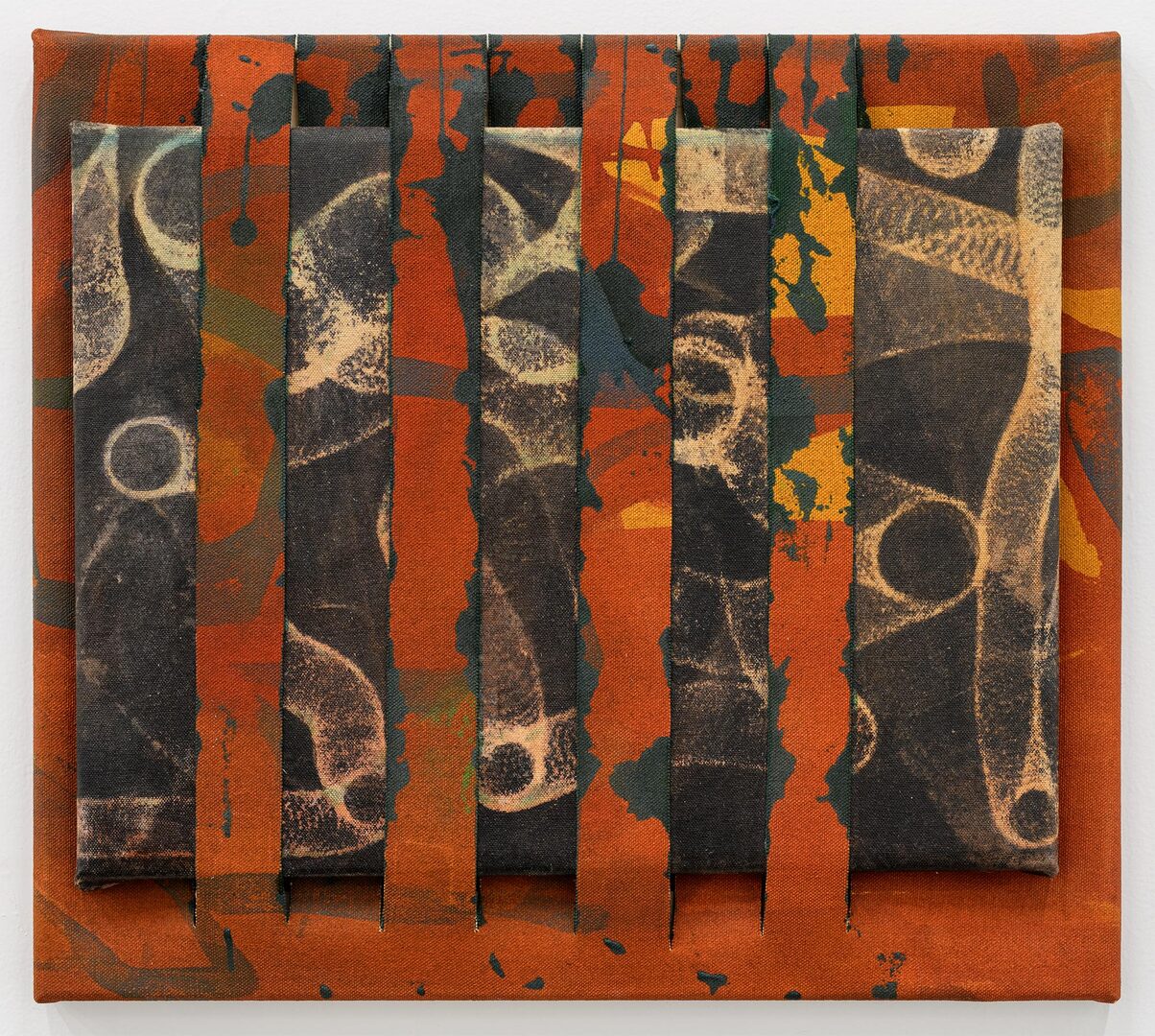
Roscar, 2023/2026. 400 x 450mm
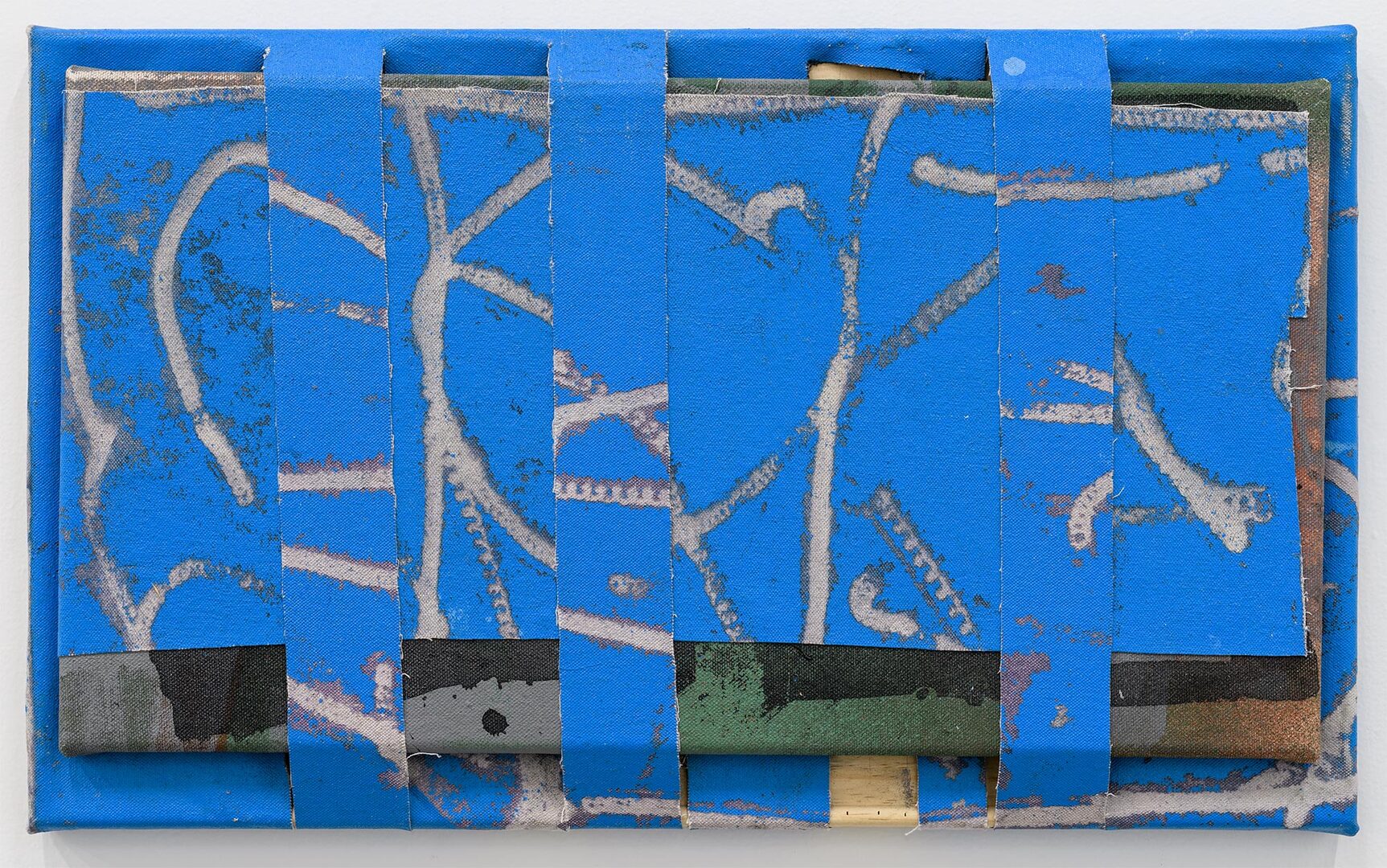
Blue Scale, 2026, 300 x 500mm
Installation images
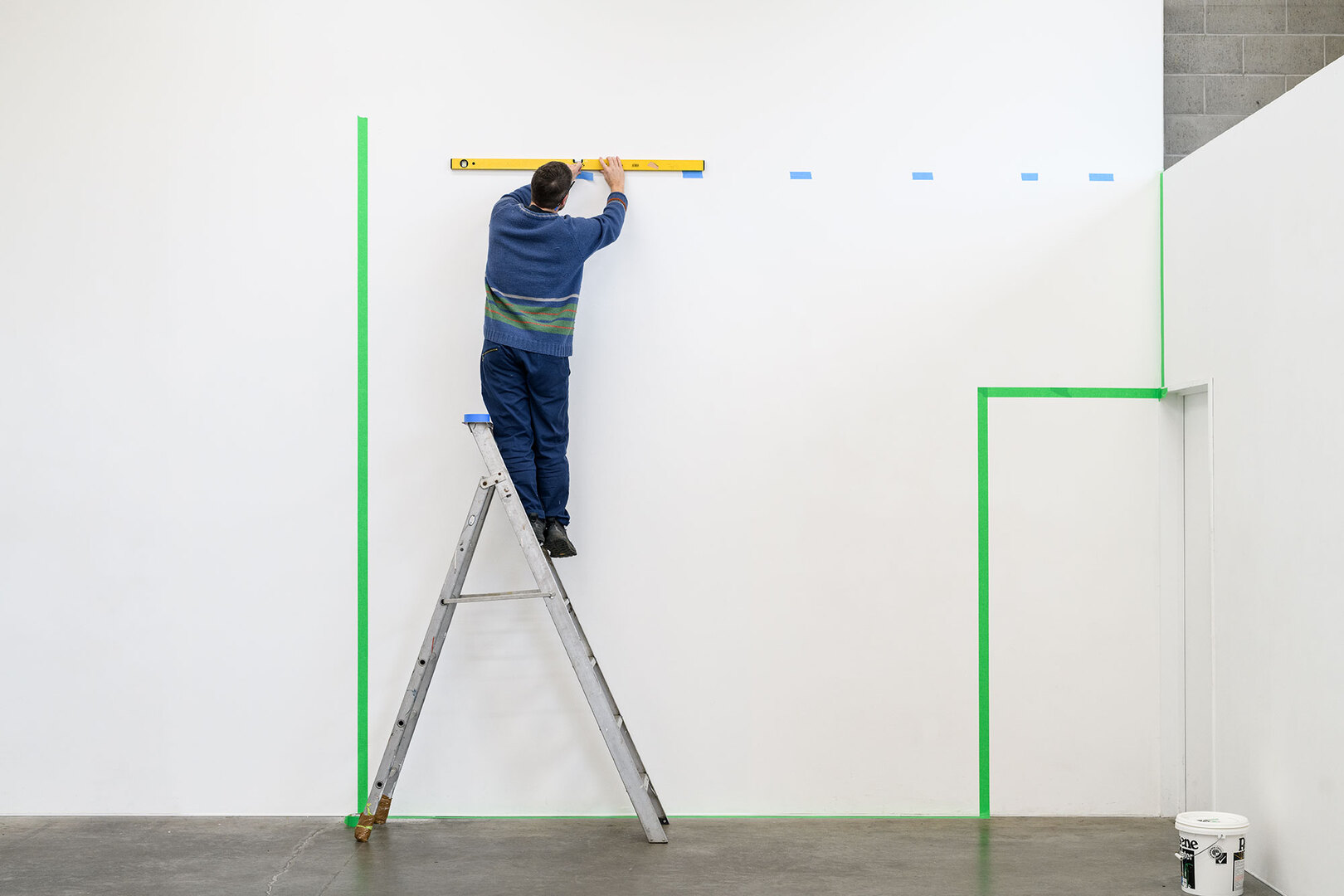
Oliver Perkins preparing the wall paintings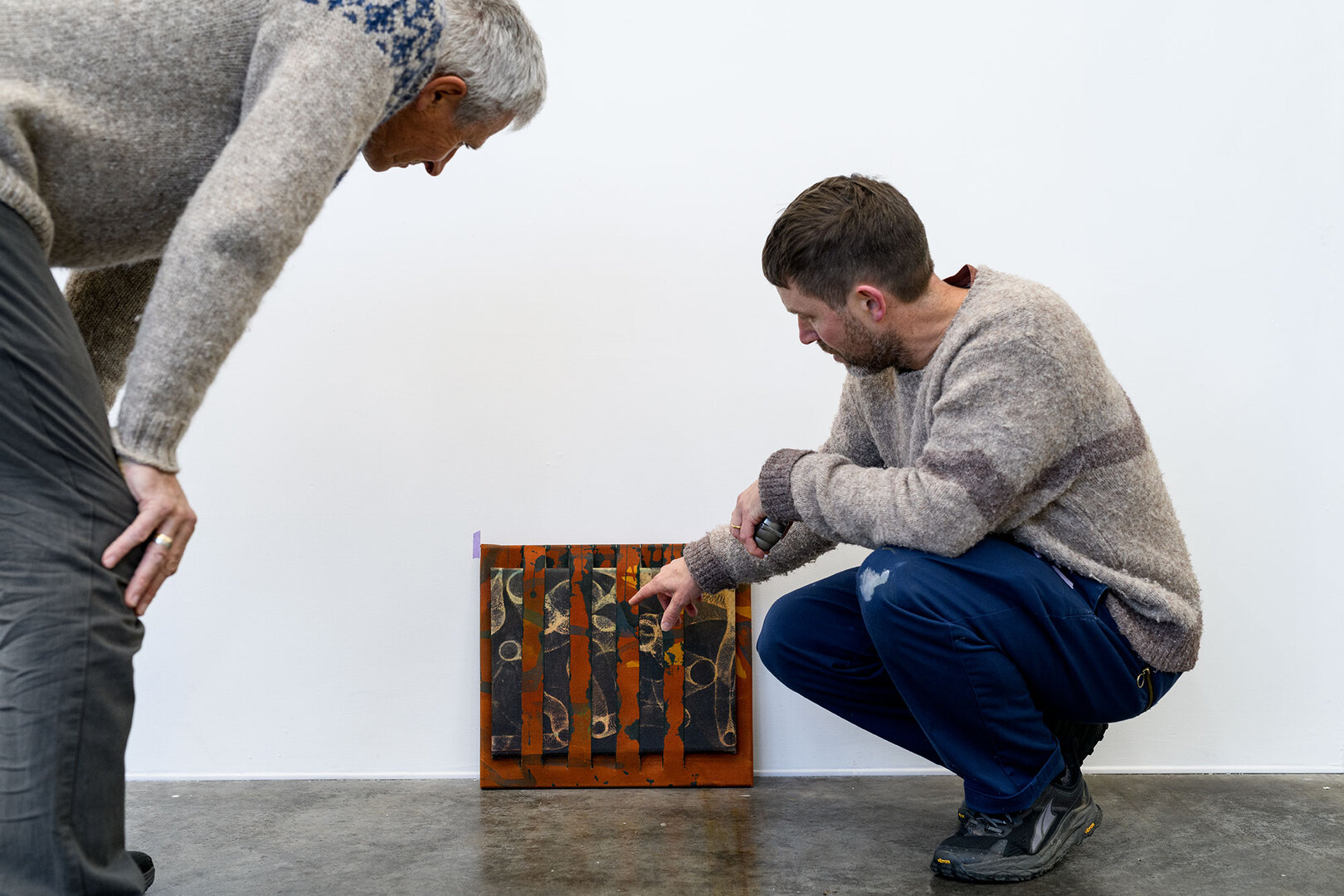
Jonathan & Oliver discussing various techniques used in the creation of Roscar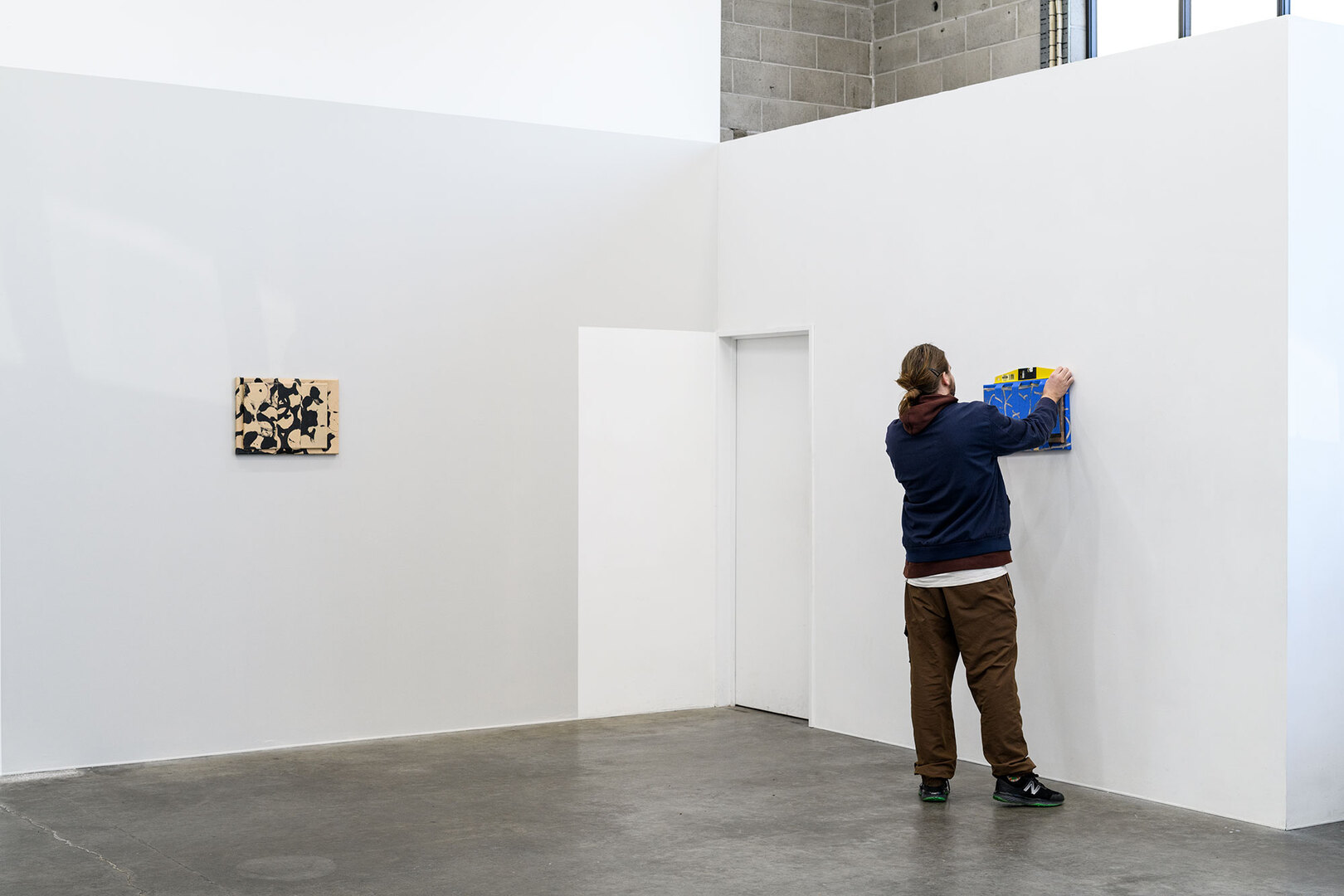
Aden hanging Blue Scale
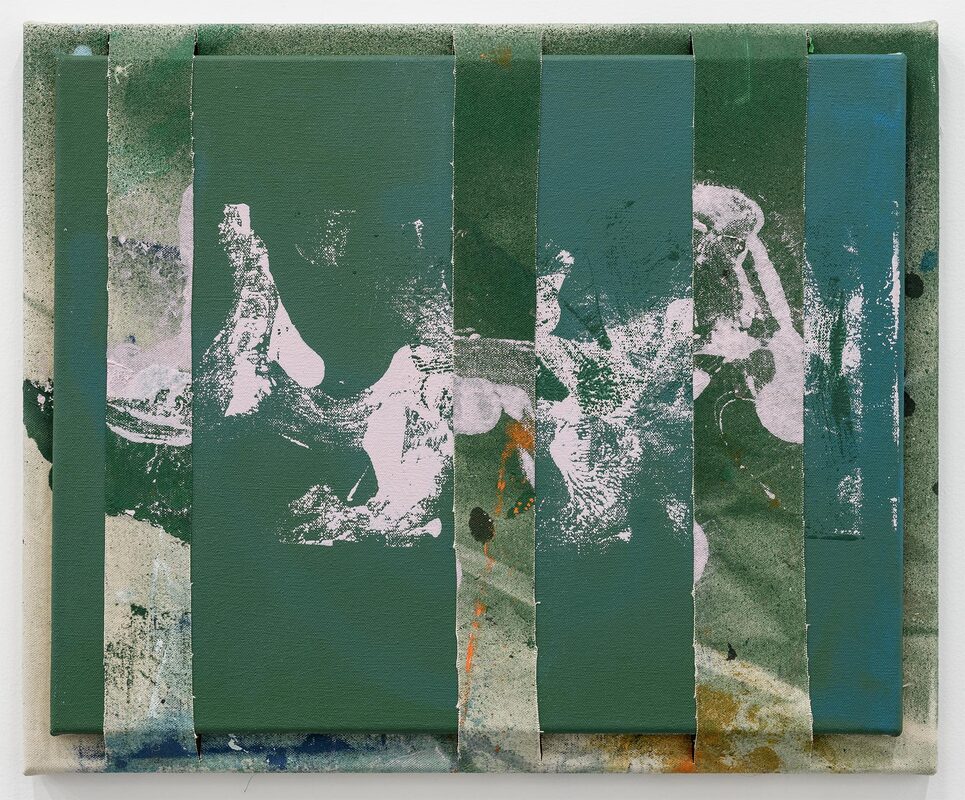
2026
acrylic, ink, oil and size on stretched canvas
450 x 500mm
Exhibited in
Sombra
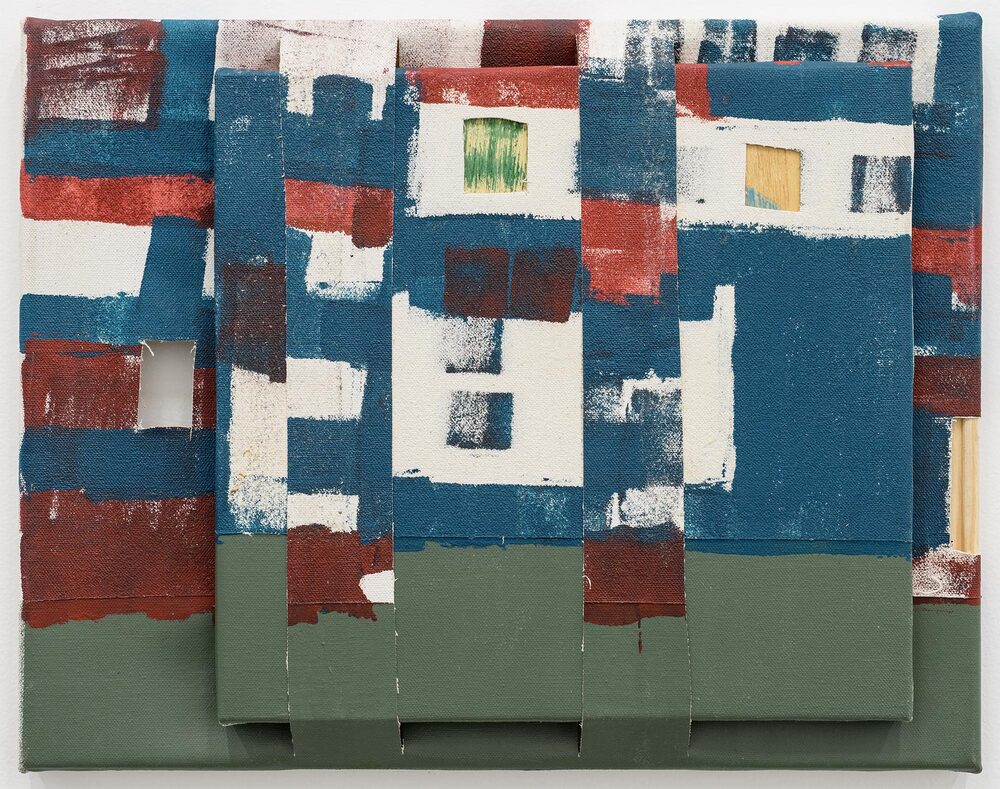
2025
acrylic, ink and size on stretched canvas
350 x 450mm
Exhibited in
Sombra
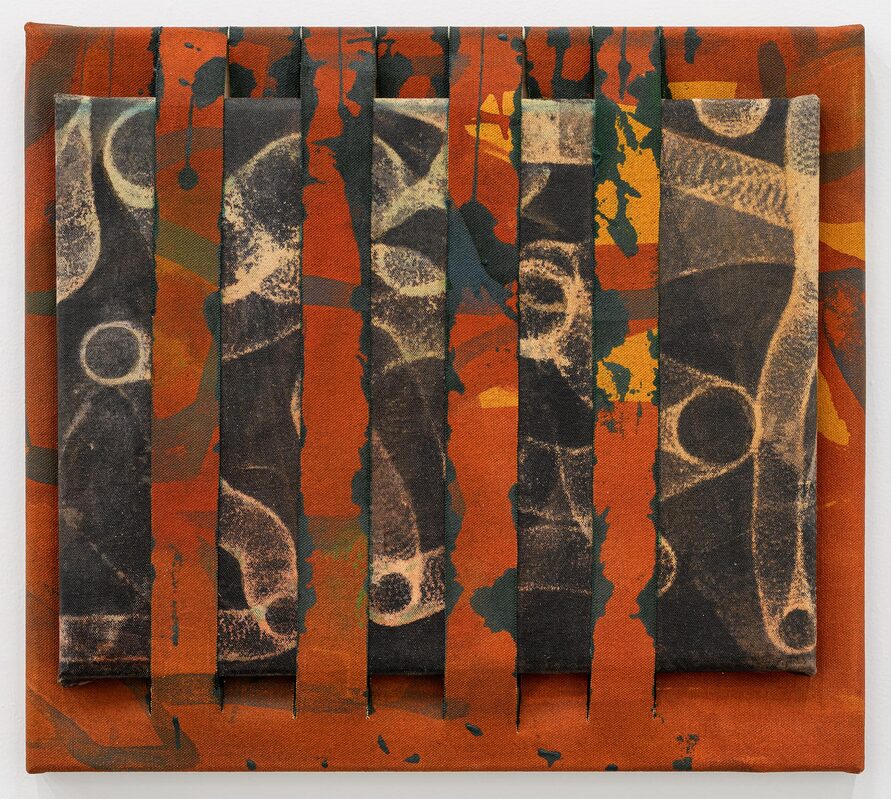
2023/2026
acrylic, ink and size on stretched canvas
400 x 450mm
Exhibited in
Sombra
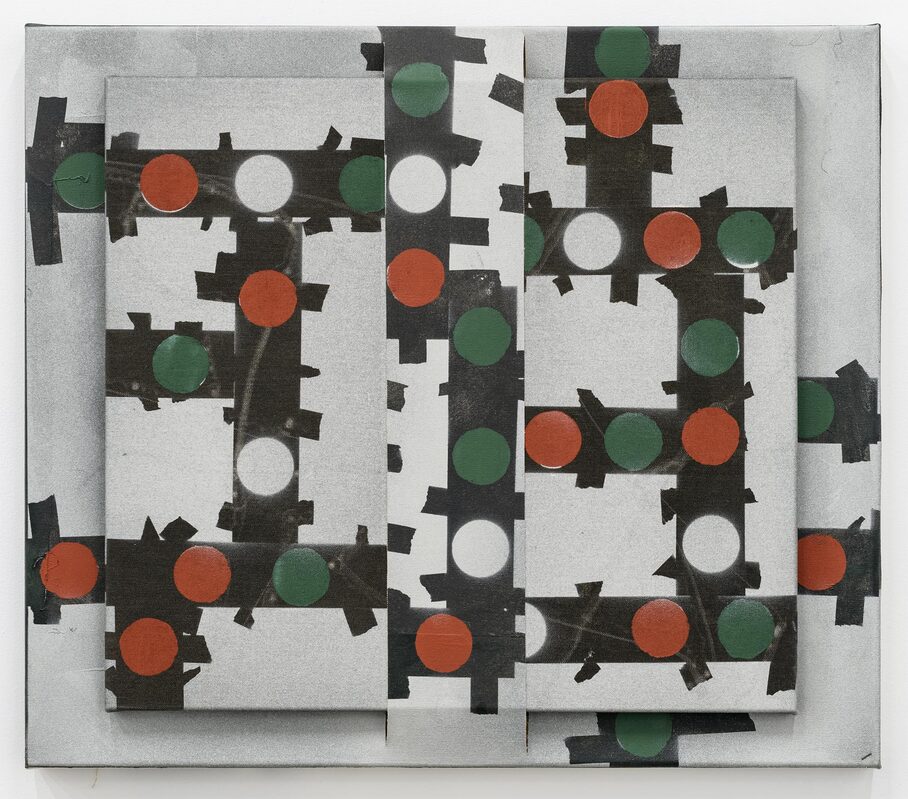
2026
acrylic, ink and size on stretched canvas
650 x 750mm
Exhibited in
Sombra
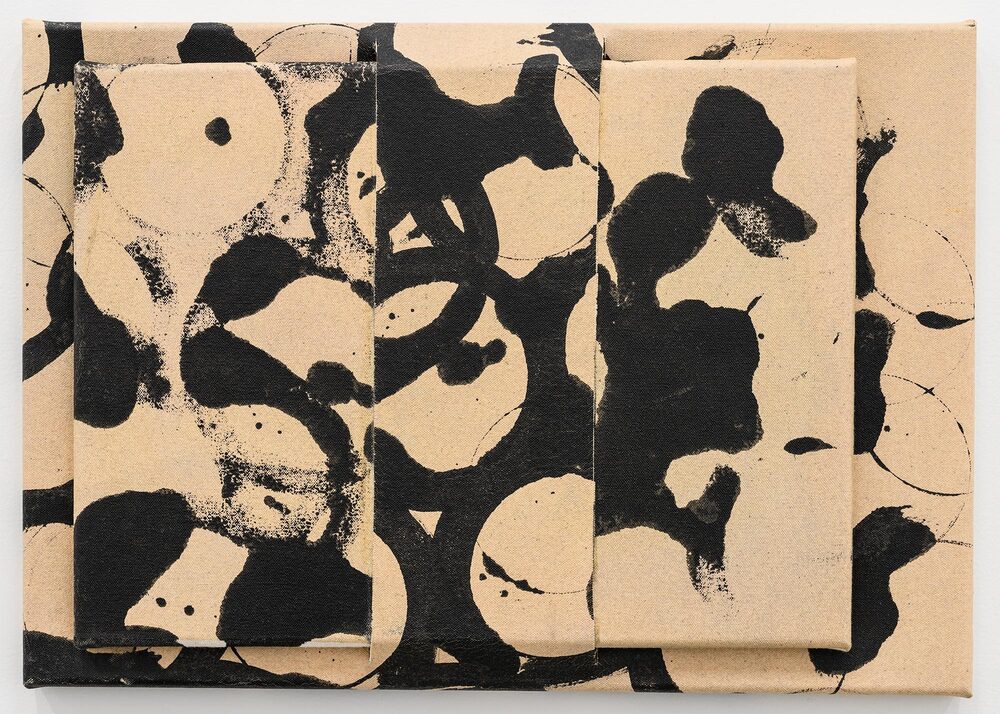
2025
acrylic, ink and size on stretched canvas
350 x 500mm
Exhibited in
Sombra
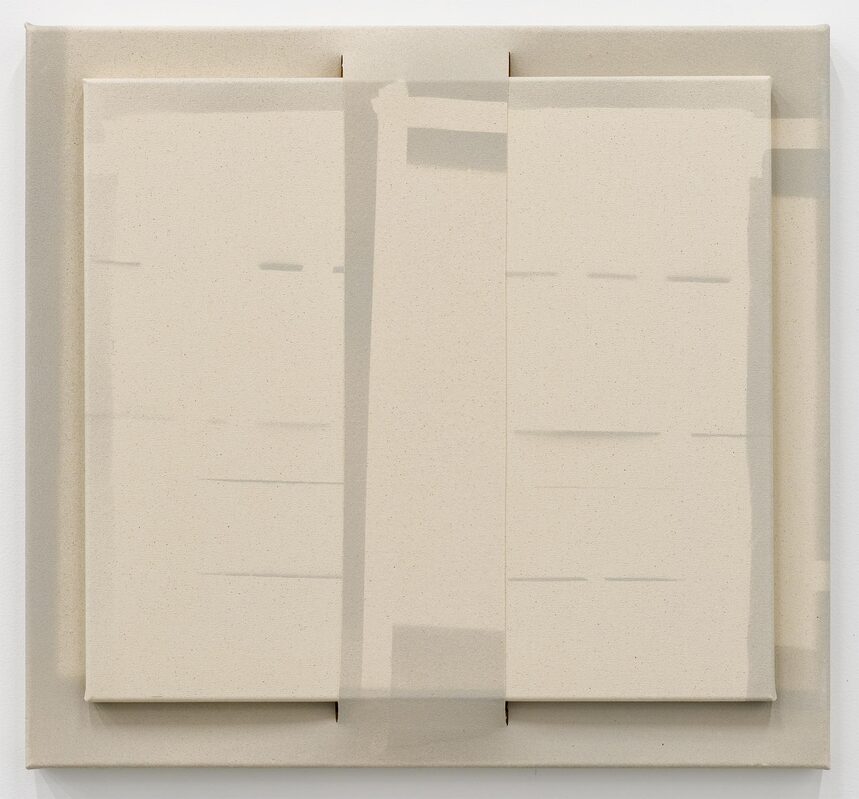
2026
acrylic, ink and size on stretched canvas
600 x 650mm
Exhibited in
Sombra
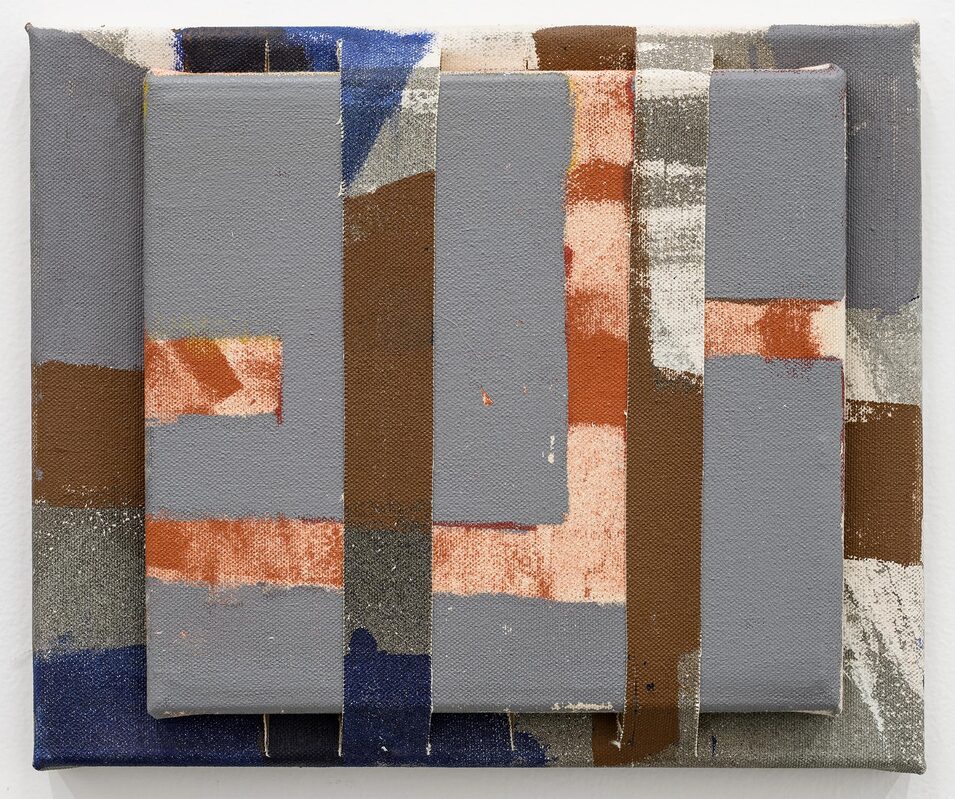
2026
acrylic, ink and size on stretched canvas
250 x 300mm
Exhibited in
Sombra
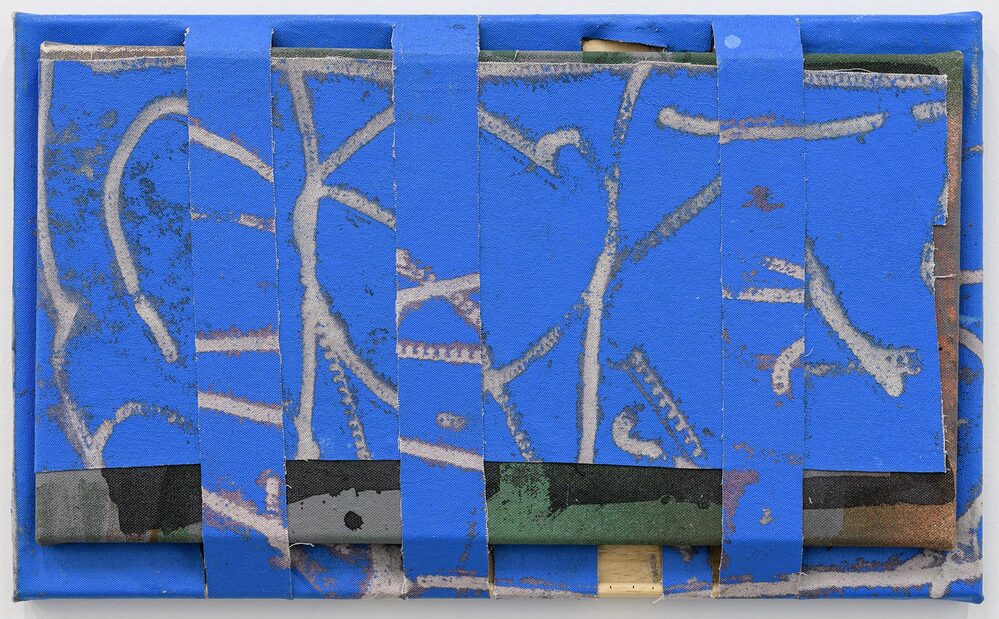
2026
acrylic, ink, oil and size on stretched canvas
300 x 500mm
Exhibited in
Sombra
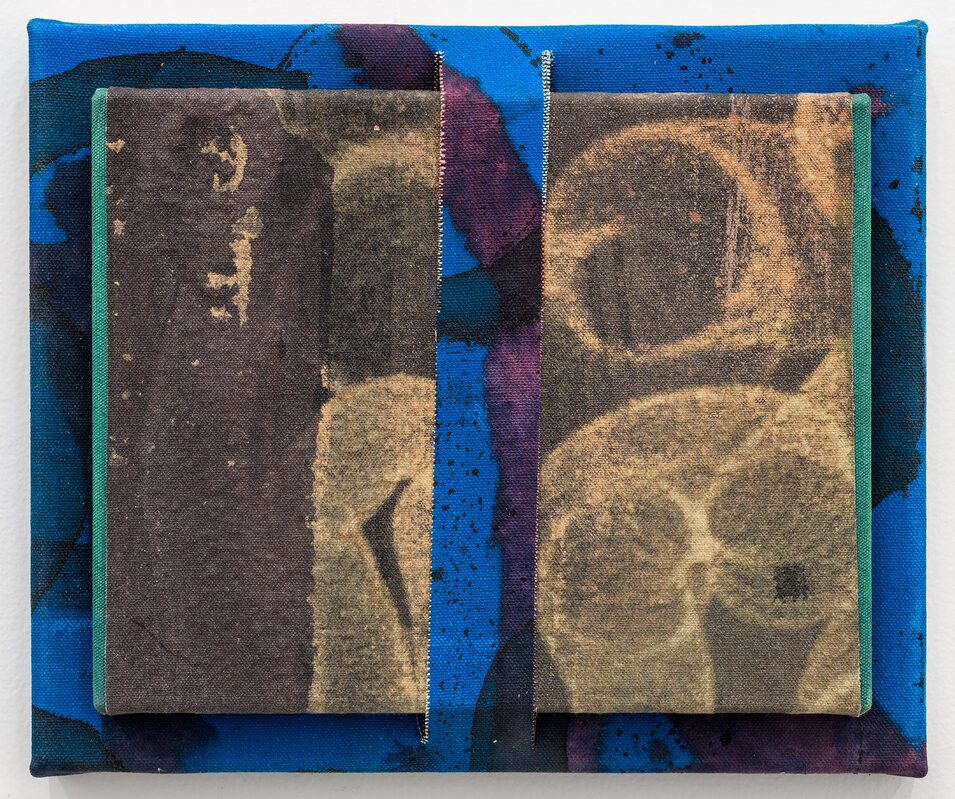
2025
acrylic, ink and size on stretched canvas
250 x 300mm
Exhibited in
Sombra
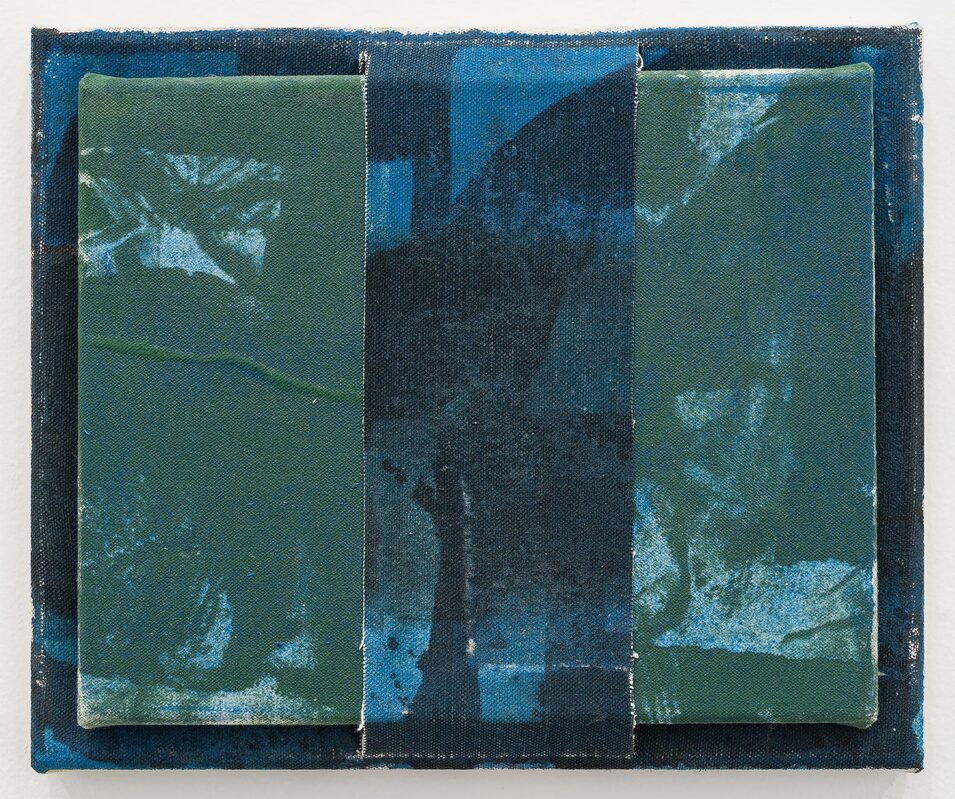
2025
acrylic, ink and size on stretched canvas
250 x 300mm
Exhibited in
Sombra
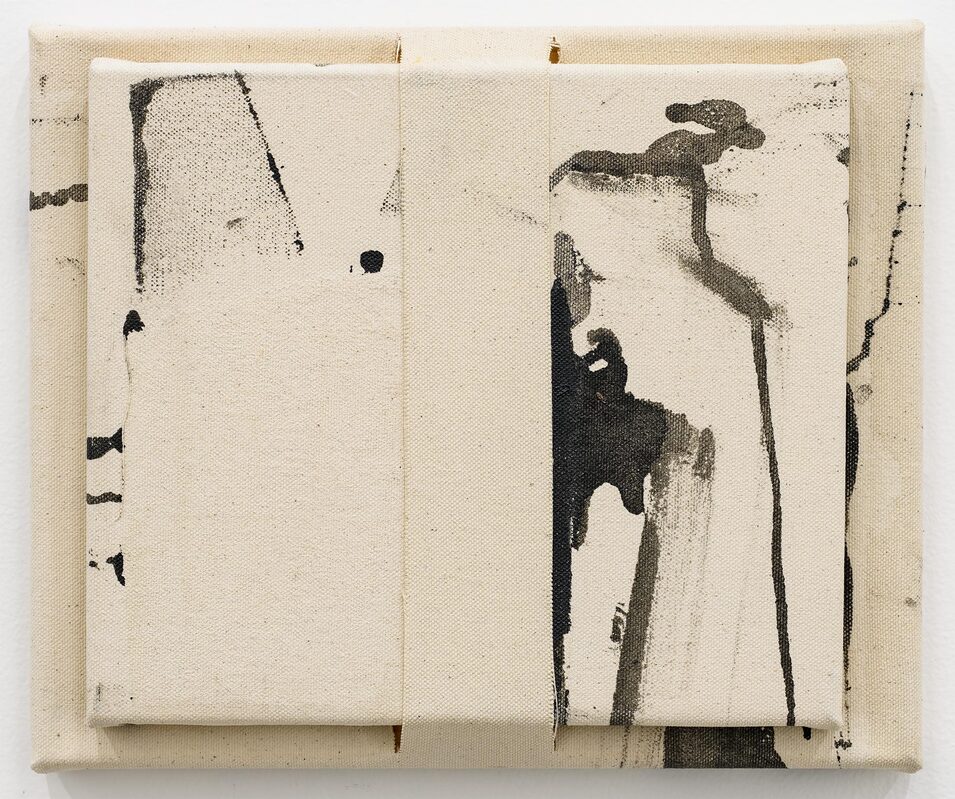
2025
acrylic, ink and size on stretched canvas
250 x 300mm
Exhibited in
Sombra