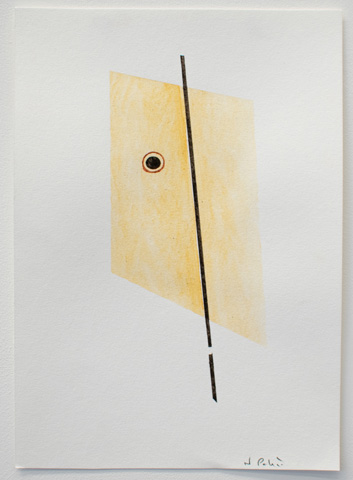
in the national interestet al.
May 7 – June 10, 2006. One of the most remarkable things about et al's
work is the inability of the spectator to worship at the altar; one can
only ponder and contemplate the physical object. This seems quite
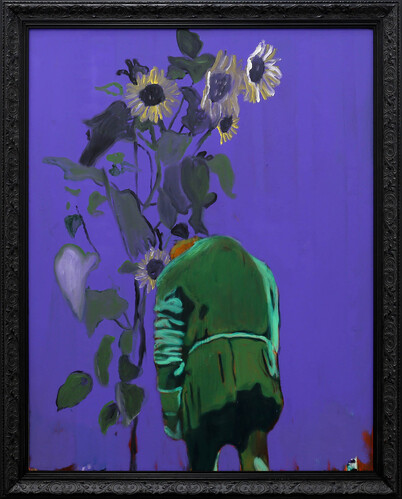
relevant when we situate 'in the national interest' in an era that
thrives on both pseudo-intellectualism and exhausted nostalgia. et al
has struck on the quintessential nature of contemporary practice,
redirecting our attention to the difficulty of interpretation, the
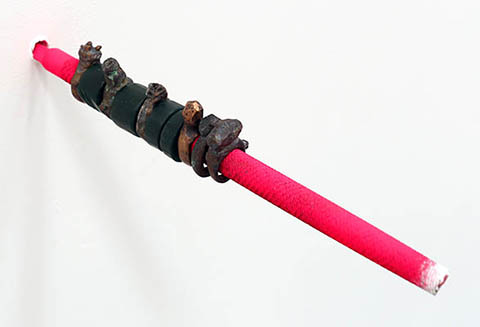
instability of modern truths in a time of doubt and discord. Themes in
'the national interest' include those of time and renewal, questions of
originality and homage that are consistently used and reused, and
reinvented again today.
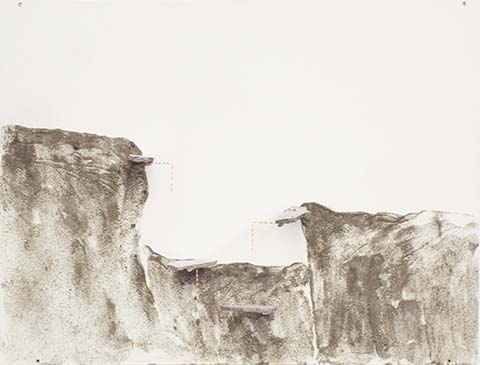
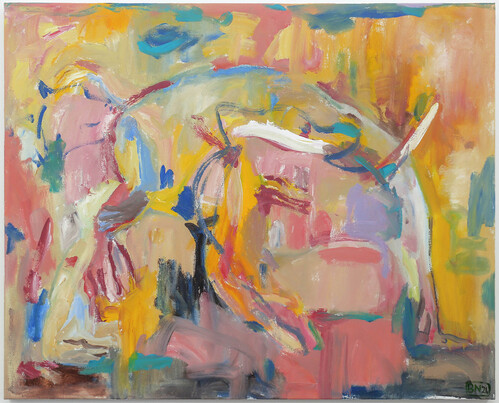
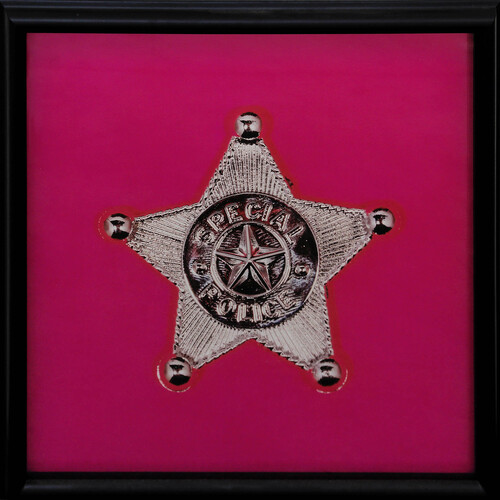
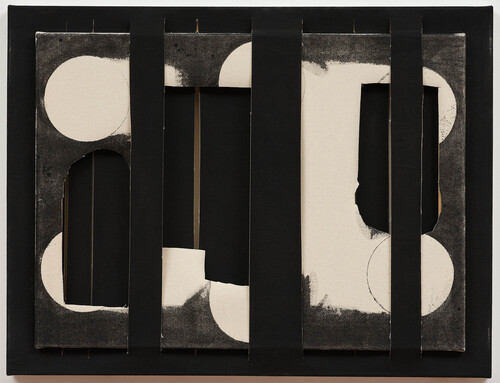
This is a frightening but exhilarating concept to explore. Viewers go into 'the national interest' peering at the white washed artifacts and ask, where am I in this blankness? And how do I begin? l budd's work encompasses the romantic and the bleak. 'in conversation with the artists' deals with the quintessential problem of language and the gap between meaning and words, always found in the blurriness of the in-between or the trembling nature of communication. Budd's work reregisters the nature of reality, reserving for us the concept that the only thing we can be sure of is that all communication and language is doubt immersed. l budd forces us to reach in without pretensions and simply read.
Budd's readymade monomime pastel panels currently lean up against the front room of the Jonathan Smart Gallery. Sixteen paper sheets painted pink, blue and green are lovingly enframed in old steel drawers with perspex tops. The sheets of paper register narratives that speak with urgency and clarity, to the extent that words are crossed out to make their message even clearer. Hence, 'instinct' is crossed out to make room for 'spirit,' and 'destroys' is underlined to illuminate 'herself.' Indeed this sense of erasure, this play of presence against absence has long been characteristic of the et al aesthetic.
In these semi-opaque shadows we ponder the other relevant theme of pantomime. We are faced, not surprisingly with Shakespeare and the workings of a poor actor, alone on stage, signaling with empty gestures. For this is the secret melancholy of et al's work, the idea that all attempted searches for meaning leave us somewhat entertained and rejuvenated but never replace that small doubt of disbelief, the cynicism that reduces us to empty gestures on a dark stage. Macbeth disintegrates in proclaiming that Life perhaps, was nothing more than a hostile noise, a tale told by an idiot, full of sound and fury and signifying nothing but silence. In Budd's work, after the storm, there is not silence but the twittering of birds. by Melissa Lam |
|||||