
April 17 - May 5, 2012
 |
 |
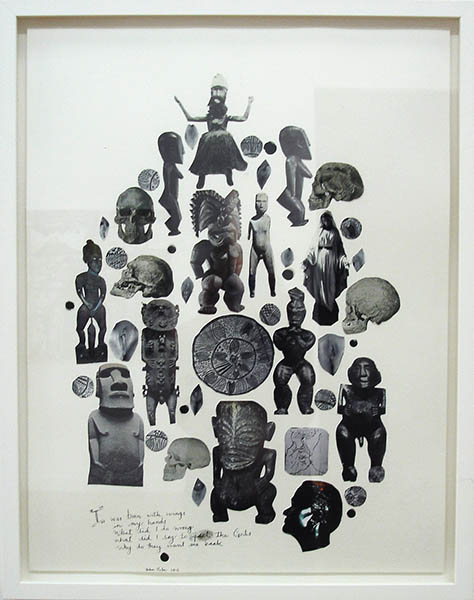
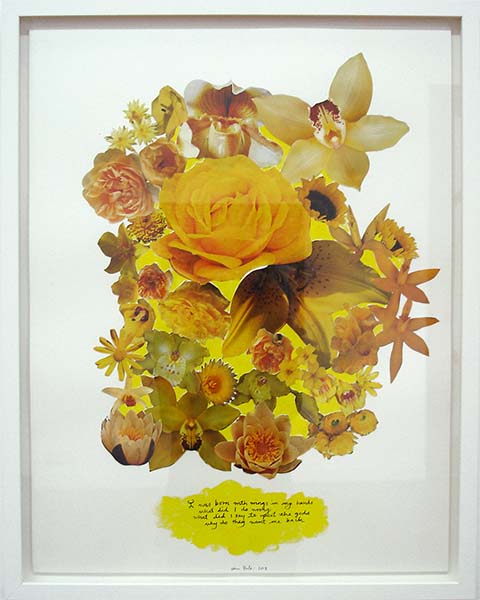
I was born with wings in my hands
what did I do wrong
what did I say to upset the Gods
why do they want me back
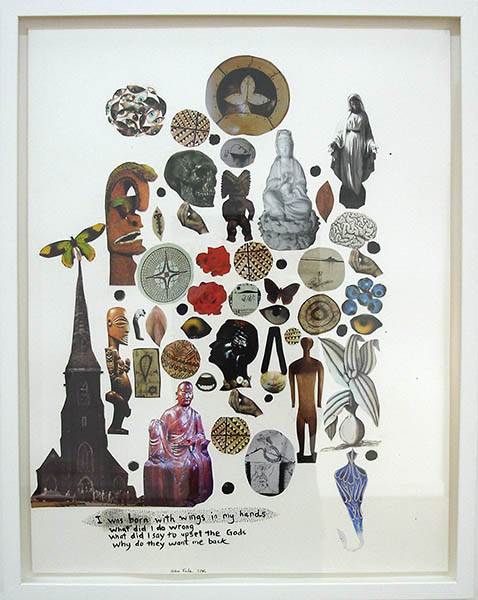
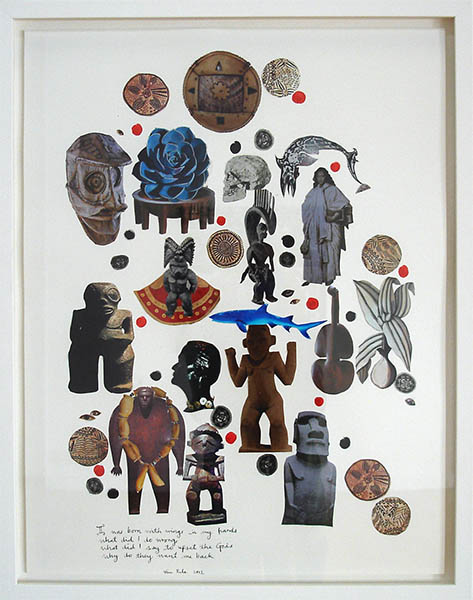
This poem, composed by John Pule, is the title of this exhibition. It is also written at the bottom of six new collages in this show, so should be read as their title also. It becomes a lament. A lament for being born with some (winged) disfigurement, for being punished or cursed by the Gods, and then finally for being returned to them.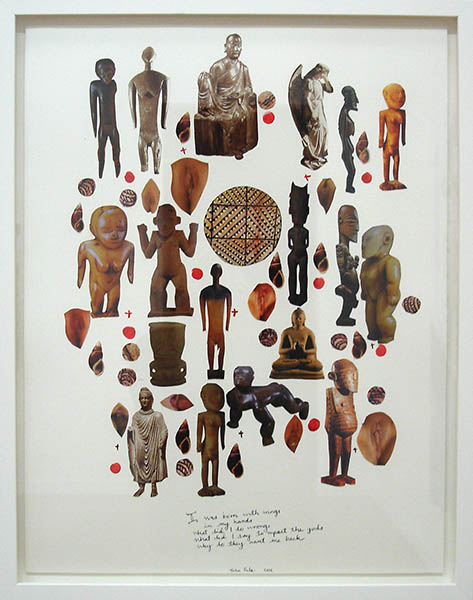 And what a multi-various plenitude these Gods are. Photographed from his own library of Pacific history, Pule presents a wonderful array of carved personifications of old deities from Hawai, Tonga and Fiji in the main. In his own Niue, these deities were destroyed by colonial missionaries (to the extent that they are represented here by one perverse doll-like entity made for a busy anthropologist in the 1920's).
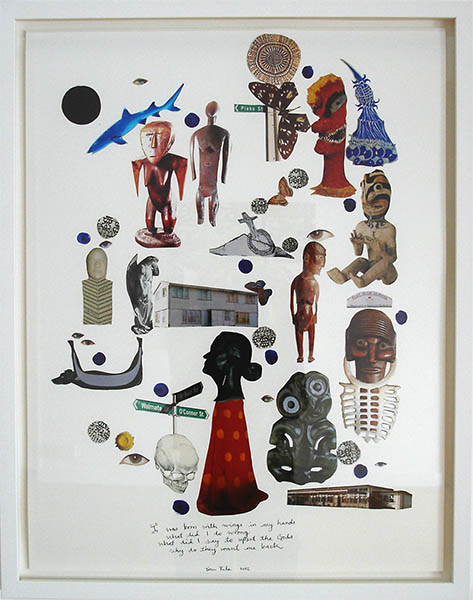 Does Pule lament the loss of these traditions past? Probably. For sex, death, Pacific history and migration (the portents of those wings again) remain the great subjects of Pule's practice - and they are all present in the gentle intensity of these collages. Yet for all this weighty presence, there remains a deep ambivalence about religion in his work. Why (after all) do they want me back - the haiku intones.
One of the collages however, is more autobiographical than the others, with photographs of the family home, John's primary school, and two bust likenesses floating fragment-like in a comparatively open visual field. While not a dense personal narrative, the blue shark may refer to his novel (The Shark That Ate The Sun), and there is at the top right a detail from one of his paintings - in this case, the major painting of the show, The Great World (To Ha).
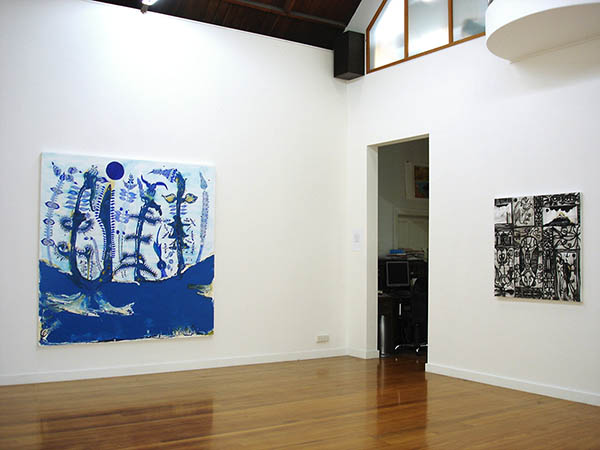
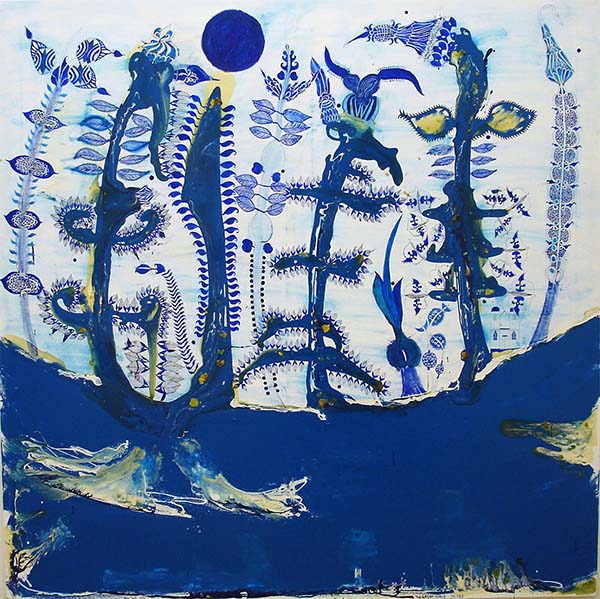
Let's call this a Kermadec painting. Inspired in part by his visit to the islands of the same name in 2011, it really is an exuberant celebration of the sea. Here is the Kermadec trench in all its vivid imaginary, with weirdly patterned, tentacle-like plant forms, both beautiful and also rather menacing, swaying in the fecund and mysterious currents of the Kermadec ridge. Different blues abound. Ultramarine alongside cobalt can look good but feel almost toxic - like the difficult hybridity that is too often life in the Pacific today. Transpose John Pule as a mixer of viscous fluids, with James Cameron in his submersible along the bottom of the Mariana Trench…there is a wonderful currency here. Or enjoy the very bottom stratum of this painting, where it is signed and titled. For Pule concludes the title with To Ha, a phrase in Niuean which means "what's next."
 |
 |
 |
 |
Details of works
The Geat World (To Ha)
oil, ink & polyurethane on canvas
2000 x 2000mm
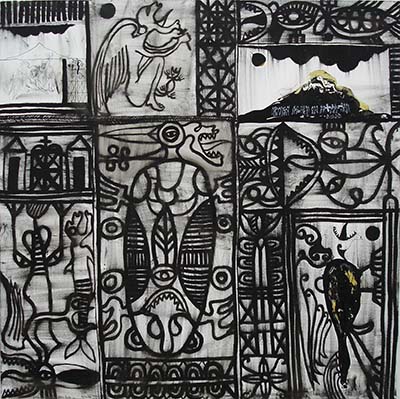
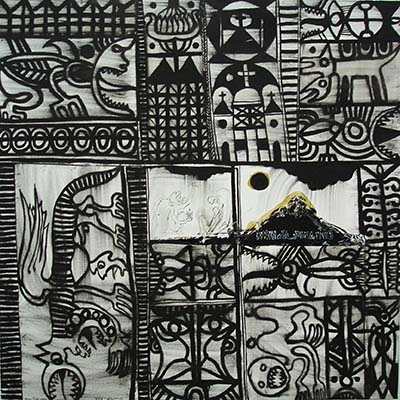
Niniko (Dazzling)
oil, ink, enamel, varnish & resin on canvas
1000 x 1000mm
Vow - Omonuo
oil, ink, enamel, varnish & resin on canvas
1000 x 1000mm
I was born with wings in my hands
what did I do wrong
what did I say to upset the Gods
why do they want me back
Collages 1 - 6
mixed media on paper
700 x 560mm framed
All works are from 2012